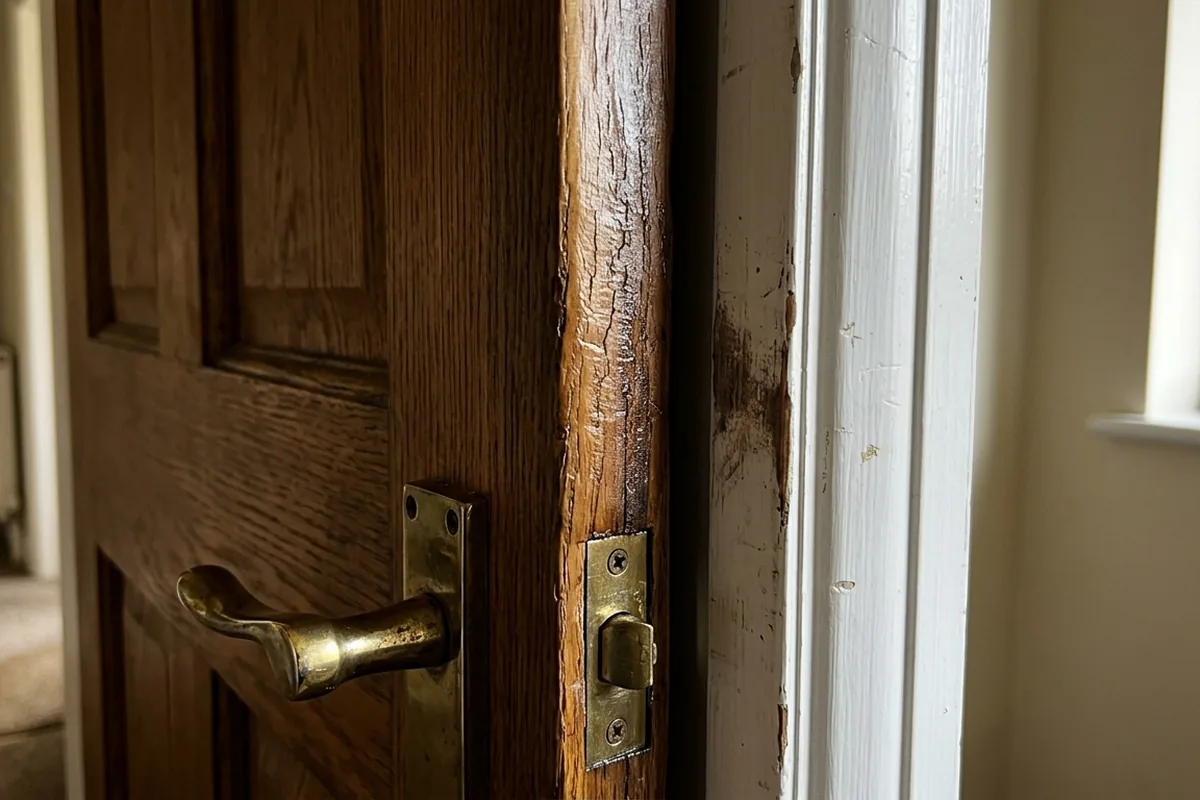
The usual sign is subtle: a front door that needs a shove, a bedroom door that scrapes the carpet, or a back door that suddenly won’t latch properly after a spell of heavy rain. In most UK homes, this usually means the door or frame has taken on moisture and swollen slightly, not that the hinges have mysteriously moved overnight. The key point is that wet weather often exposes tiny weaknesses: gaps in paint, hairline cracks, or damp getting into the frame or surrounding wall.
If the sticking eases again in dry weather, it is almost always moisture-related movement in the wood, not a major structural issue. If it stays bad even when things dry out, that can point to ongoing damp in the frame, wall or floor that is worth checking properly.
What rainy-weather sticking is really telling you
When rain and damp air arrive together, timber doors and frames behave like a sponge. They absorb moisture from:
- direct rain on an exposed front or back door
- damp air in a hallway, porch or small landing
- rising or penetrating damp in the surrounding wall or floor
Timber swells across its width more than its length, so even a millimetre or two of movement is enough for a once-free door to start rubbing on the frame or the carpet.
A few useful clues:
- Sticks mainly at the top or latch side: often simple swelling of the door edge or frame.
- Sticks at the bottom only after rain: could be swollen door, rising damp in the floor, or a slightly dropped hinge made worse by moisture.
- Frame feels soft or flaky: may be early rot or persistent damp, not just weather movement.
When it’s “normal” movement
In many British houses with older timber doors, especially in terraces and semis, a bit of seasonal sticking is common. If:
- the door only sticks in prolonged wet spells
- it improves noticeably in dry, sunny weather
- the frame and skirting around it look sound and dry
then it usually means the wood is unsealed in places or the paint/varnish is tired, allowing extra moisture in. Annoying, but typically not a structural worry.
When it hints at a damp problem
Take it more seriously if you notice:
- flaking paint, dark staining or a musty smell around the frame or skirting
- persistent swelling that doesn’t improve after a dry week
- crumbling timber at the bottom of the frame or threshold
In those cases, the sticking door is more of a symptom: moisture may be getting in from a leaking porch roof, a bridged damp-proof course, a cracked external sill, or a badly sealed external door step.
Simple checks and small fixes you can safely try
Before reaching for a plane or sander, it helps to work out exactly where the door is catching and how bad the moisture issue is.
Stand inside with the door nearly closed and look all round the gap. You are looking for rubbing points and uneven gaps, not perfection.
A couple of low-risk checks:
- Run a strip of thin paper (or a till receipt) around the closed door. Where it snags, that’s where the door is tight.
- Feel the frame and the wall or skirting nearby. If it feels noticeably colder and slightly damp compared with other walls, there may be a local damp issue, not just a fat door.
If the sticking is mild and clearly linked to wet spells, you can often improve things with:
- Drying and ventilation: keep the area aired. In a small hallway or porch, propping the door open on dry days helps the timber release moisture.
- Checking external paintwork and sealant: look at the outside of the door and frame. Peeling paint, bare wood or cracked silicone around the frame let more rain in. Repainting and resealing in dry weather can slow future swelling.
- Very light sanding of the tight spot: only once the door has dried out. Sand gently, test the fit often, and avoid removing lots of material in one go. If you plane or sand heavily while the door is swollen, it can end up too loose when the weather turns dry.
If you’re in a rented flat or house, it is usually better to report persistent sticking and visible damp to the landlord rather than doing heavy trimming yourself.
When sticking means you should look beyond the door
Sometimes the door is just the messenger. If you keep having to force it after rain, especially at ground-floor level, it can be pointing to a wider moisture issue.
Common situations in UK homes include:
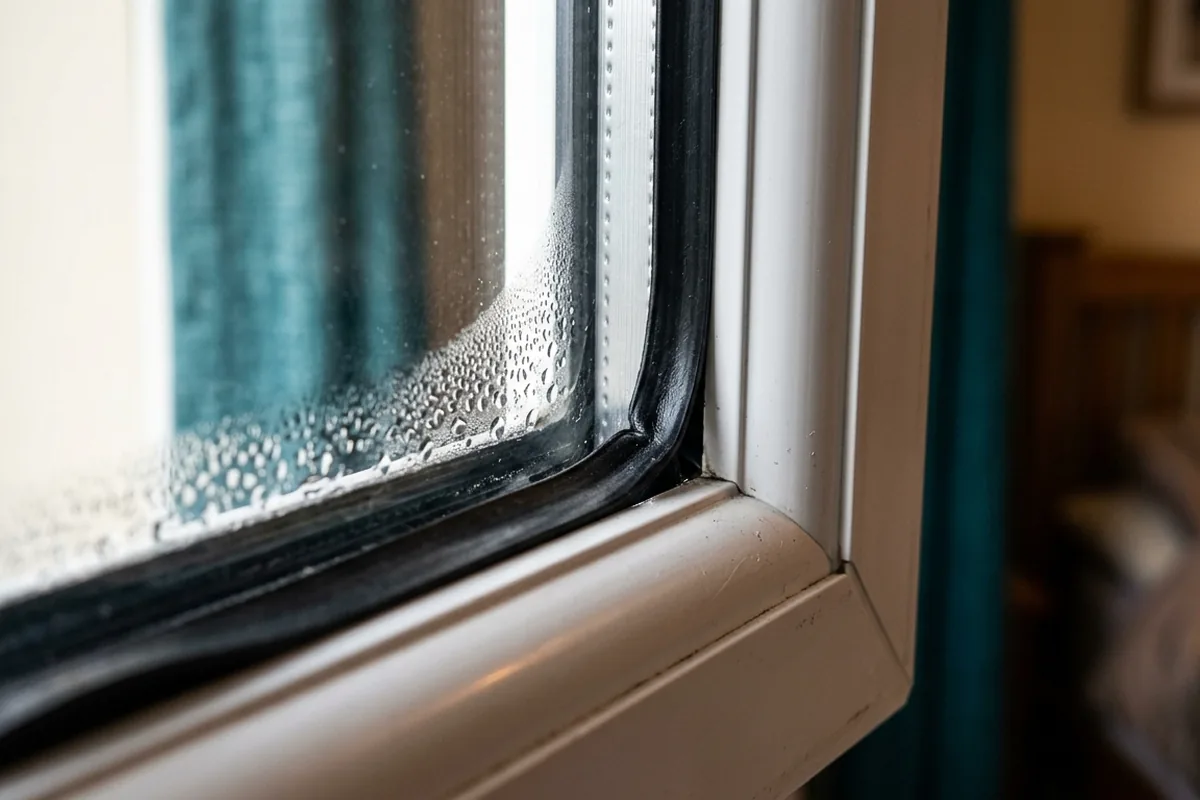
- A front door in a small unheated porch, with condensation on the inside glass and a musty smell. The damp air keeps the timber swollen.
- A back door off a cold utility room with no extractor fan, where drying washing adds extra moisture.
- Old timber frames sitting on a damp concrete step, where water soaks in from the outside every time it rains.
In these cases, it’s worth:
- improving ventilation (trickle vents open, door left ajar when you are home, extractor fans used properly)
- checking outside ground levels and drainage so water is not pooling against the step or wall
- keeping an eye on skirting boards and flooring near the door for signs of ongoing damp or mould
If you notice black mould on skirting, soft timber, or swelling in laminate flooring beside the door, that is usually beyond a quick DIY trim. A joiner or damp specialist can check whether water is getting in behind the frame or through the wall.
If the door is uPVC or composite and starts catching after heavy rain, that’s less about swelling and more likely:
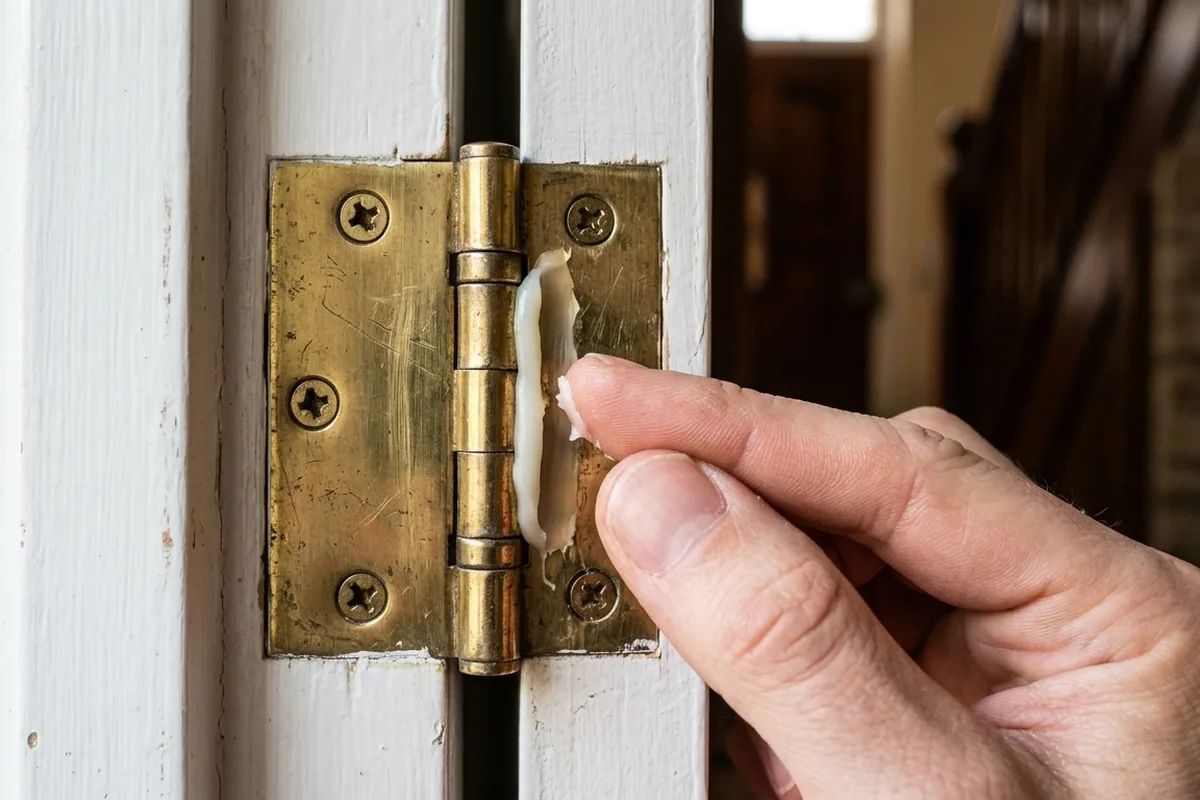
- slight movement in the frame or hinges
- the house settling
- fixings working loose
These doors don’t swell like timber, so any change after rain is more about movement of the surrounding structure or fixings made more obvious by weather. Adjusting hinges is possible but easy to get wrong; if you’re unsure, a competent handyman or door fitter is safer than guessing with an Allen key.
When you reach the point where the door won’t latch, has to be slammed, or you see obvious damp damage, it is usually time to stop sanding and get a proper look at the frame, step and surrounding wall. A sticking door is often the first polite warning that moisture is getting where it should not.