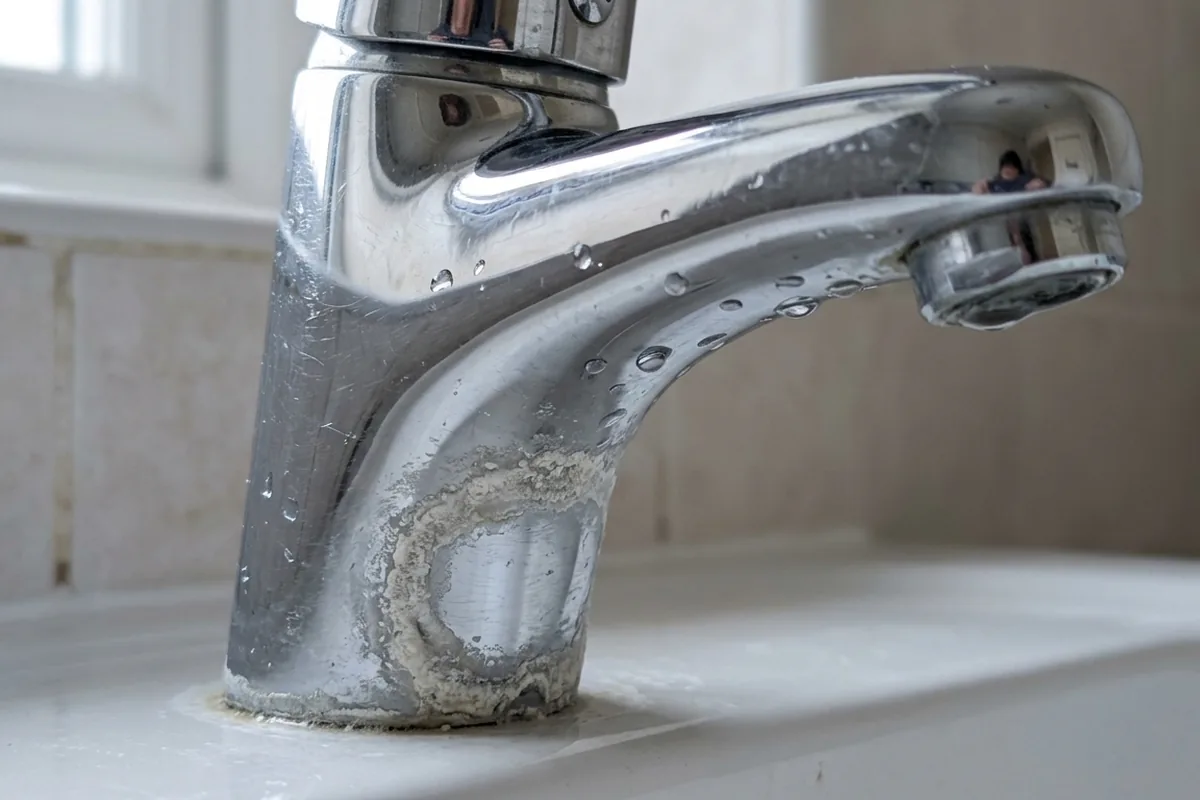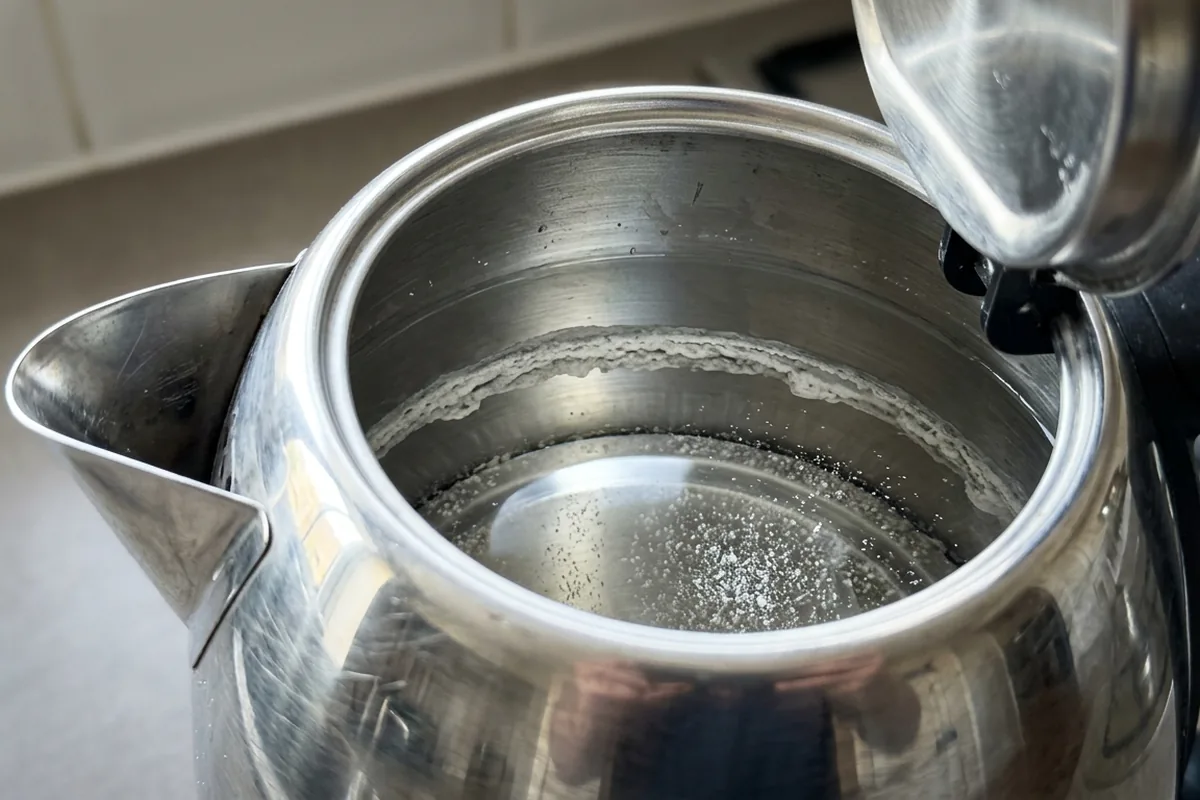
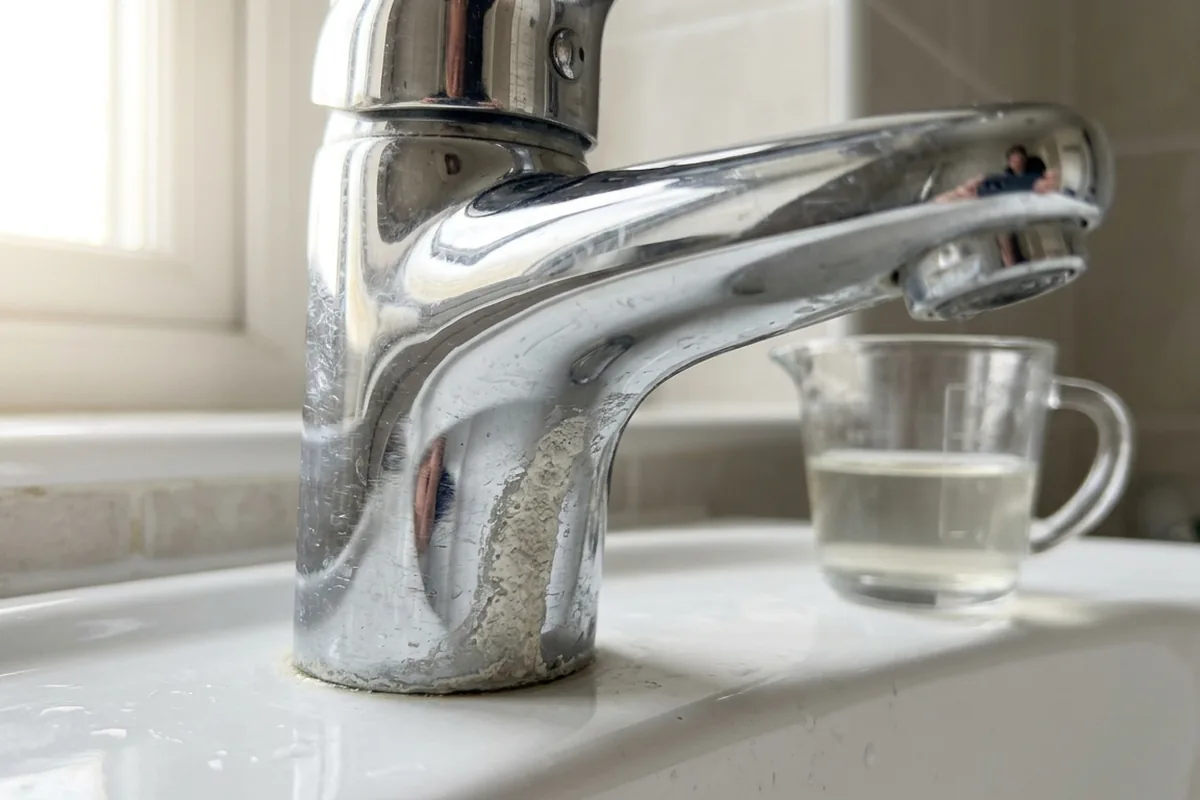
That cloudy white crust around your bathroom taps looks like an easy win for vinegar. It usually is limescale from hard water, and vinegar can soften it. But the same acidity that tackles limescale can etch delicate finishes, dull chrome and stain certain metals if you go in too strong or leave it on too long. The safest approach is to test vinegar first on a hidden patch of the tap body, diluted, and only then decide how to use it.
The key reason to test vinegar on taps first
Vinegar is mildly acidic, which is why it works on limescale. The problem is that not all tap finishes are the same, especially in UK bathrooms where you may have:
- standard chrome-plated brass
- brushed or “stainless steel look” finishes
- black, gold or bronze-coloured taps
- older taps with worn plating
On some of these, straight vinegar can:
- dull a shiny surface, leaving a flat patch
- mark or streak brushed finishes
- creep into tiny chips in the plating and expose the metal underneath
- react with some metals and cause dark patches
Testing on a small, hidden area under the spout or behind the tap base lets you see if:
- the colour changes
- the shine dulls
- the surface feels rougher once dry
If anything looks worse after a minute or two with diluted vinegar and a rinse, stop using vinegar on that tap and switch to a gentler limescale remover made for delicate finishes.
How to test and use vinegar safely on bathroom taps
You do not need a full science experiment, just a quick controlled check before soaking the whole tap in vinegar or wrapping it in vinegar-soaked kitchen roll.
Safe test method:
1. Mix vinegar with equal parts warm water in a small bowl.
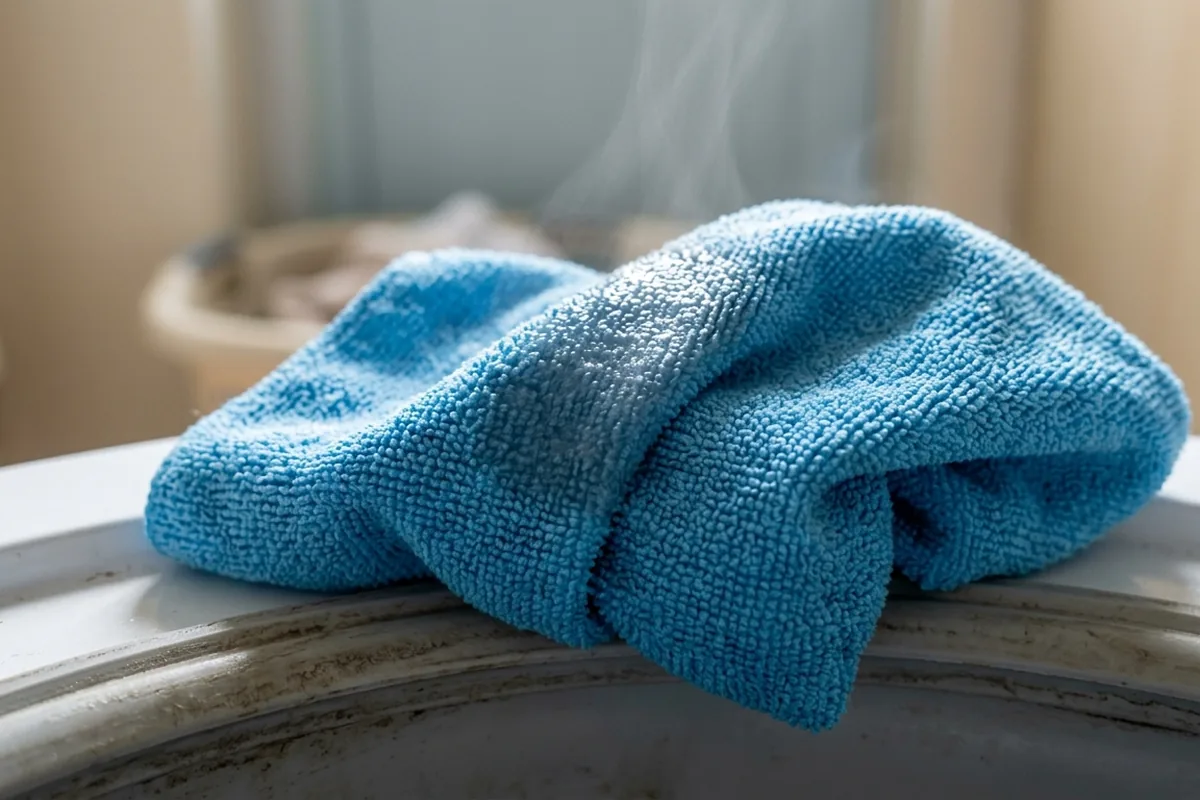
2. Dip a cotton bud or corner of a microfibre cloth into the solution.
3. Dab it on a hidden area of the tap, no drips on visible parts.
4. Leave it for about 1 minute, keeping an eye on it.
5. Wipe clean with plain water, then dry with a soft cloth.
6. Check in good light for any change in shine, colour or texture.
If the finish looks the same, it is usually safe to use that same diluted mix on the visible limescale, but still avoid long soaking. Ten to fifteen minutes is normally enough for light build-up around the base of a tap or on the end of the spout.
If you want to wrap vinegar-soaked kitchen roll around a tap, keep it weaker (about 1 part vinegar to 2 parts water) and check every few minutes, especially on modern black or brushed taps.
When vinegar is helpful, when it is not, and safer alternatives
Vinegar is handy, but it is not a magic solution for every bathroom surface.
It is usually helpful for:
- light limescale on standard chrome taps and shower heads
- crusty build-up on the aerator at the end of the spout
- white marks on a metal plug chain or metal waste
It is not ideal, or should be avoided, when:
- the tap is labelled as “special finish”, “PVD”, matt black, brushed gold or similar
- the finish already looks patchy or pitted
- you have natural stone around the taps (marble, limestone, travertine) – vinegar can etch stone
- limescale is extremely heavy and flaky, where a proper limescale remover may be safer and quicker
If you are unsure what surface you have, or you are in a rented flat and do not want to risk your deposit, start with warm water and a drop of washing-up liquid and a soft cloth. Often, what looks like limescale is partly soap scum and will wipe away with a bit of patience.
For stubborn limescale where vinegar is risky, look for a bathroom limescale remover that says it is suitable for your tap finish and follow the label. Many UK products from places like B&Q or Screwfix are designed to cling to surfaces and rinse off cleanly without long soaking.
A few extra safety points:
- Never mix vinegar with bleach: it can release dangerous fumes.
- Keep vinegar away from damaged grout and silicone sealant as it can weaken them over time.
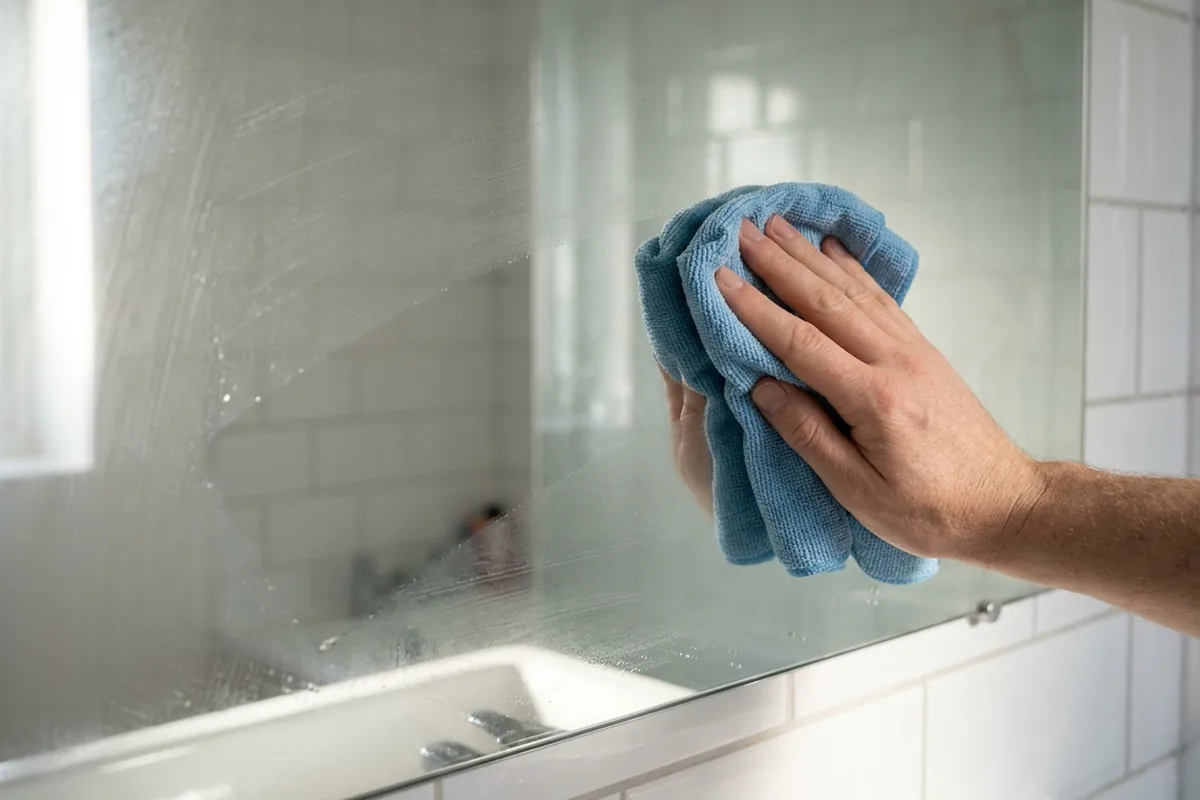
- Always rinse taps with clean water after using vinegar and dry with a microfibre cloth to avoid new marks.
If, after testing, you are happy that your tap tolerates diluted vinegar, it can be a cheap way to keep limescale at bay. If the finish reacts or you are at all unsure, the safest option is to leave vinegar in the cupboard and use a gentler, finish-safe cleaner instead.