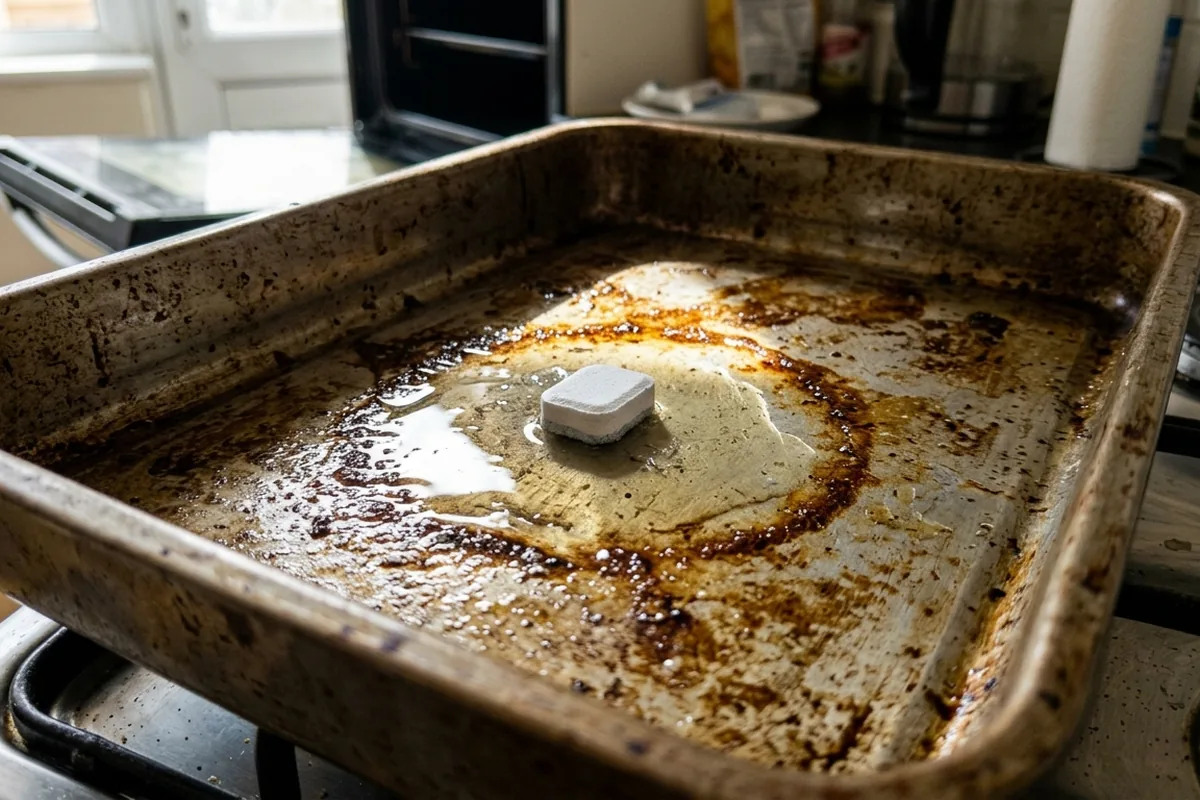
That brown, baked-on layer on your oven trays that laughs in the face of normal washing-up is exactly where the dishwasher tablet trick can help. The basic idea is simple: you dissolve a dishwasher tablet in hot water in the tray, let it soak and then wipe away the softened grease. It works best on greasy, carbonised build-up on metal trays and racks, but it is not magic, and it can damage some coatings if you overdo it.
Used sensibly, it can save a lot of scrubbing on standard enamel or stainless-steel trays. It is far less useful on heavy rust, flaking non-stick, glass that is already scratched, or trays with decorative finishes. Always check what material you are dealing with before dropping a tablet in and walking away.
When the dishwasher tablet oven tray trick actually helps
The trick relies on the strong detergents and alkalis in dishwasher tablets. These are designed to break down baked-on food and grease in a closed dishwasher, so they can be very effective in a roasting tin full of burnt-on fat from a Sunday roast.
It tends to work well when:
- The tray is stainless steel or enamel (like many standard oven trays).
- The main problem is grease, browned fat or food residue, not deep rust.
- The dirt is widespread but not inches thick.
- You’re happy to do a proper rinse and wipe afterwards.
A simple way to use it safely on a metal tray is:
1. Put the tray in the sink.
2. Add very hot tap water so it just covers the dirty area.
3. Drop in one dishwasher tablet and let it dissolve.
4. Leave it to soak for 20–40 minutes, checking occasionally.
5. Wearing gloves, use a non-scratch sponge or cloth to wipe away the loosened grime.
6. Rinse thoroughly and wash as normal with washing-up liquid.
You’ll often see the worst brown layer soften so it comes away with far less effort than dry scrubbing. For a grim tray from a rented flat or a student house, that can be enough to bring it back to something you’re happy to put food on.
Where this trick fails or can cause damage
Because dishwasher tablets are strong, they are not suitable for every tray or every mess. The main risk is to non-stick coatings and decorative finishes.
Be cautious or avoid the trick in these situations:
- Non-stick trays and tins: Prolonged soaking in a concentrated dishwasher solution can dull or lift some coatings. A short, weaker soak may be fine, but if the non-stick is already scratched, the tablet will not fix that.
- Coloured or patterned ovenware: Printed designs, cheap enamel or decorative roasting dishes can fade or craze.
- Aluminium trays (often lighter, softer metal): Strong alkali can discolour or pit bare aluminium.
- Glass oven dishes: It may help with grease, but harsh scouring afterwards can scratch the glass. A gentler cream cleaner or bicarbonate of soda paste is usually safer.
If you’re unsure what you have, look for any symbols or wording on the underside, or check the maker’s guidance online.
There are also times when the trick simply will not give you the result you want:
- Heavy rust on an old tray: the tablet will not reverse corrosion.
- Burned, flaky black patches that feel rough even when clean: that is damaged metal or enamel, not just dirt.
- Thick tar-like build-up from years of use: you may need several goes, plus some careful scraping, or it might be time to replace the tray.
If a tray still smells burnt after a good clean and rinse, and the surface is rough or peeling, replacement is usually safer than more aggressive cleaning, especially for anything that touches food directly.
How to get the most from it – and safer alternatives
Used with a bit of common sense, the dishwasher tablet trick can be part of a wider approach rather than the only answer.
For a typical UK kitchen with a couple of grim oven trays and a greasy grill pan, this is a sensible way to use it:
- Start with the worst tray first, so you can see what the method can do.
- Use very hot, not boiling, water to avoid warping thinner trays.
- Ventilate the kitchen and wear gloves; the solution can be harsh on skin.
- Keep the soak fairly short at first, then extend next time if needed.
If you’d rather avoid dishwasher tablets altogether, or you are dealing with delicate finishes, these gentler options often work well:
- Bicarbonate of soda paste: Mix with a little water, spread over greasy areas, leave for 30–60 minutes, then scrub with a non-scratch pad and hot soapy water.
- Washing-up liquid and very hot water: For lighter grease, a long soak in hot, soapy water in the sink or bath (with a towel underneath to protect the surface) can be all you need.
- Oven-specific cleaners: Products sold in places like B&Q are formulated for oven trays and often come with clear surface guidance on the label; follow these closely and avoid mixing with other cleaners.
If you notice the tray’s surface going dull, the colour changing, or black specks coming away that look like coating rather than dirt, stop, rinse well and switch to a milder method. A slightly stained but intact tray is better than a shiny one with damaged coating.
For most households, the dishwasher tablet oven tray trick is best kept for those really greasy metal trays and racks a few times a year, not as your everyday clean. If you need to repeat it every couple of weeks, it may be simpler to line trays with foil or baking paper in future and keep the worst of the mess off the metal in the first place.