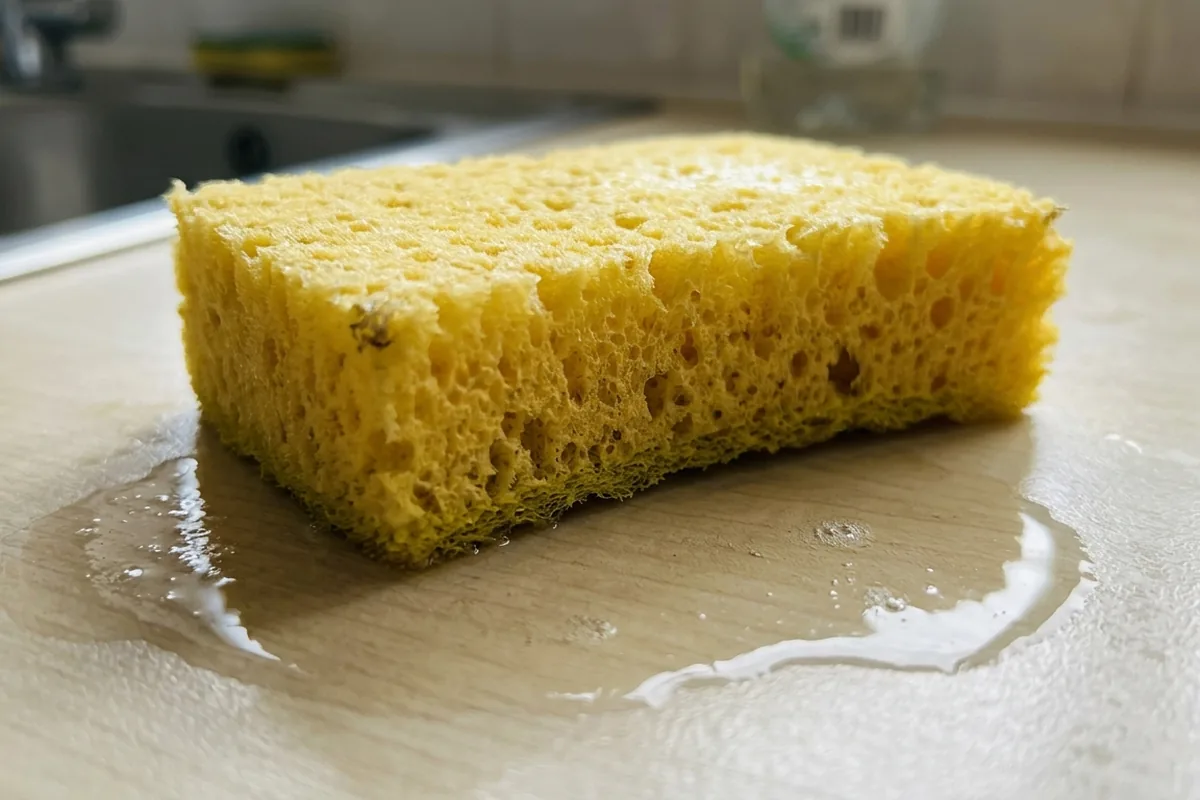
That “cleaned the kitchen” smell turning sour an hour later is usually not the bin or the drain. Very often it is the old sponge you have just wiped everything with. Once a sponge has been used for a while, it becomes a warm, damp, food‑soaked hotel for bacteria. When you wipe your worktops, you are often spreading those bacteria and their odours around, not removing them. Fresh washing-up liquid scent can briefly mask it, but as the surfaces dry, the stale, sour smell returns.
If your kitchen smells worse after a tidy-up, the quickest check is simple: smell the sponge. If it has even a hint of sour, musty or “wet dog” odour, it is past its best and should go straight in the bin.
Why old sponges start to stink and spread odours
Old sponges smell because they trap food residue, grease and moisture deep inside. The tiny holes and fibres are ideal for bacteria to cling to, especially when the sponge lives beside a warm hob or in a damp washing-up bowl.
A few things make it worse:
- Staying damp: A sponge that never fully dries (for example in an under-sink washing-up bowl) gives bacteria time to multiply.
- Greasy washing-up water: Fat from roasting trays and frying pans soaks in, then goes rancid.
- Crumbs and food bits: Tiny particles from chopping boards and plates lodge in the sponge and rot.
- Warm kitchens: In a cosy terraced house kitchen with the oven or tumble dryer on, bacteria grow faster.
When you then wipe:
- Worktops
- The hob
- Around the sink
- The fridge door and handles
you are re-wetting the bacteria and spreading them across a larger area. As those damp areas dry, the volatile compounds from the bacteria are what you can smell. That is why the room can smell worse after you have “cleaned”.
It is not just about odour. A heavily used sponge can also move bacteria from raw meat juices or a leaky chicken packet onto places like taps, cupboard handles and the kettle.
How to stop your sponge making the kitchen smell
You do not need a complicated routine, but you do need to be strict. The aim is to limit how long a sponge is used, keep it as dry as possible between uses and avoid using it for every single job.
Try these basics:
- Replace sponges regularly: For a typical family kitchen, aim for every 1–2 weeks, sooner if it smells or looks slimy.
- Rinse thoroughly after use: Squeeze through under hot tap water until no food bits or foam are left, then squeeze as dry as you can.
- Let it dry in the open: Store it upright in a small rack or on a draining board, not sitting in the bottom of the sink or a puddle.
- Separate jobs: Use a microfibre cloth for worktops, and keep one sponge just for washing-up. Do not use the same old sponge for the bin lid, the floor and the plates.
- Bin it at the first whiff: Any sour or musty smell means it is time to throw it away, even if it looks fine.
If you like to stretch things a little, you can occasionally refresh a sponge, but it is still not a long-term solution. A hot wash in the dishwasher or washing machine may reduce odour for a short while, but the material weakens and the inner layers are hard to fully clean. Once the sponge starts to crumble, discolour badly or feel slimy, it has had its day.
Better options for a cleaner-smelling kitchen
If your kitchen often smells stale even when the bin is emptied and the sink is clear, tackling the sponge is one part of the picture. Choosing the right tool for each job helps keep odours down across the whole room.
A few simple swaps work well in most UK homes:
- Microfibre cloths for surfaces: Easier to wash at 60°C in the machine, so they do not harbour the same level of odour as old sponges. Good for laminate worktops, cupboard doors and the window board behind the sink.
- Separate scrubbers for heavy jobs: A non-scratch scourer or brush for oven trays and pans means your main sponge is not constantly soaked in greasy water.
- Paper towel for raw meat spills: If juice leaks onto the worktop or fridge shelf, use kitchen roll first, then clean with spray and a washable cloth. Do not use your everyday sponge on raw meat spills.
- Check other smell sources: A slow-draining sink, dirty washing-up bowl or damp under-sink cupboard can also add to that “off” kitchen odour. Cleaning those with fresh cloths and then drying them properly makes a big difference.
If you prefer reusable options, have a small stack of cloths and rotate them. Pop used ones straight in the laundry basket, not back on the radiator or draped over the tap for days.
The main rule is simple: if the thing you are cleaning with is old, damp and slightly smelly, it can only move odours around, not remove them. Swapping to a fresh sponge or clean cloth is often enough to make the whole kitchen smell genuinely clean again after a wipe-down.