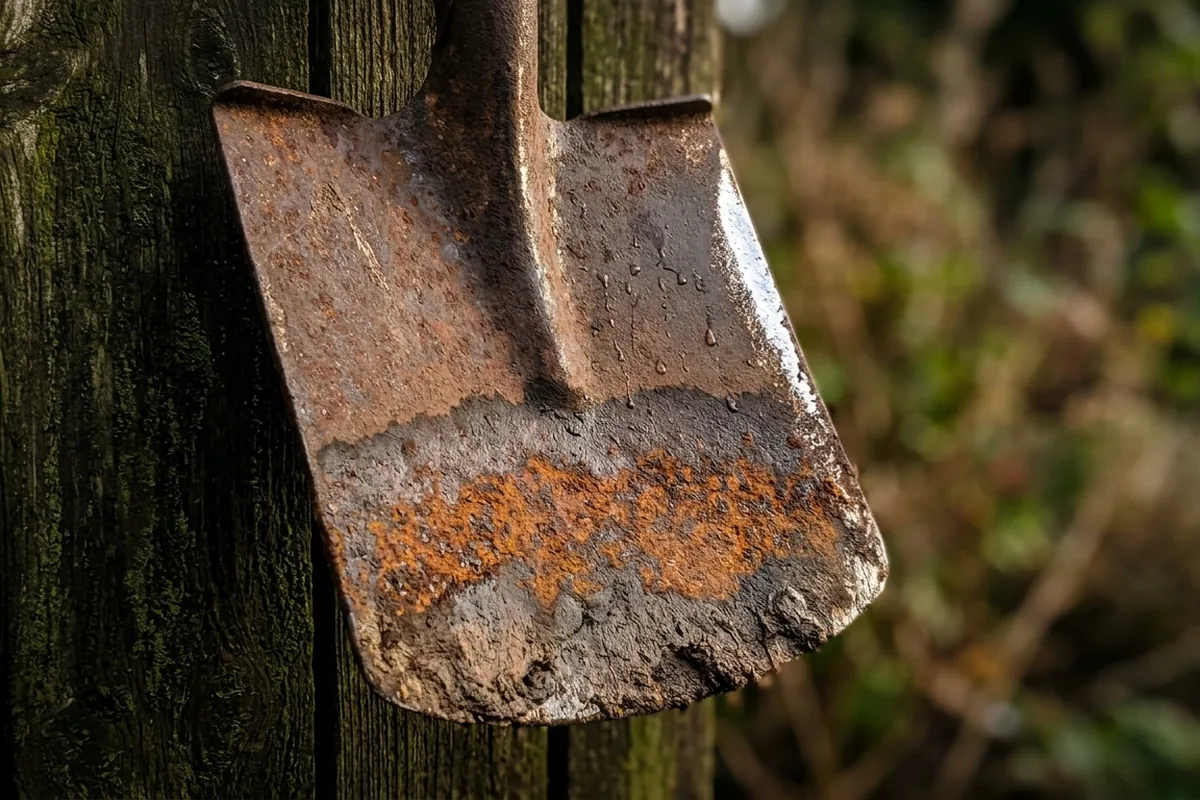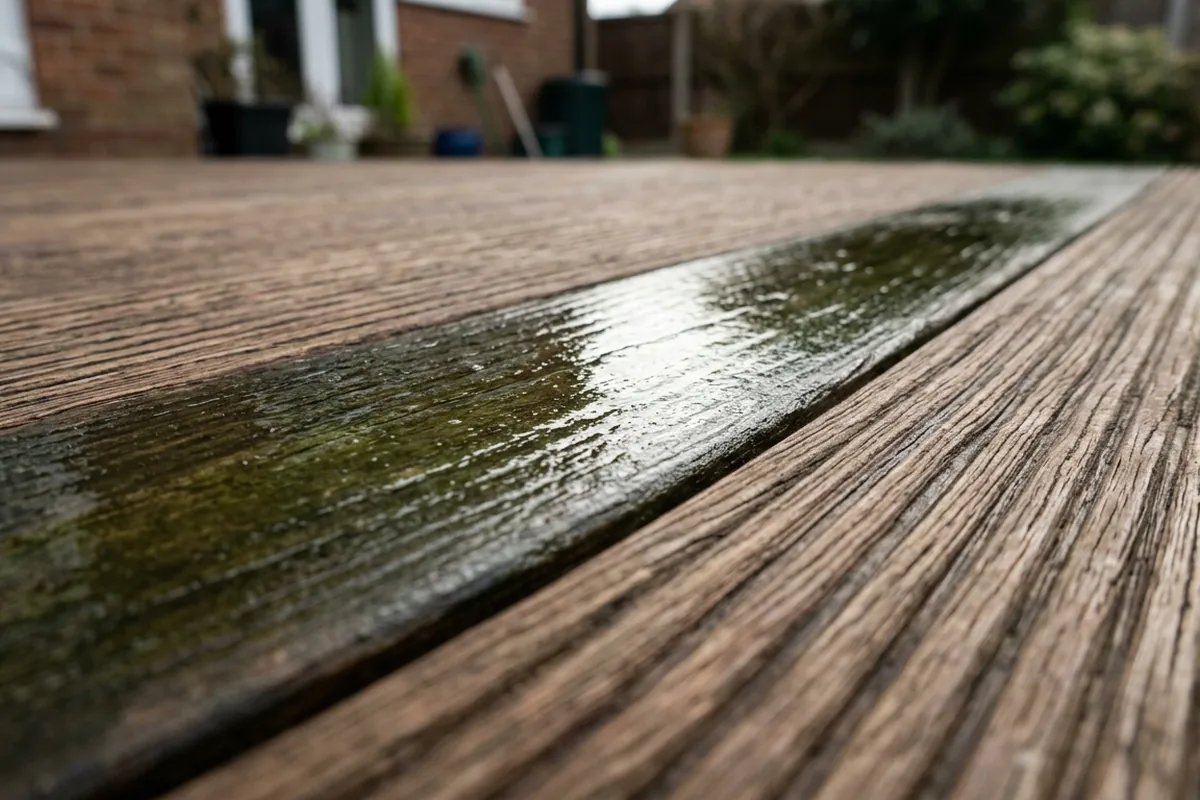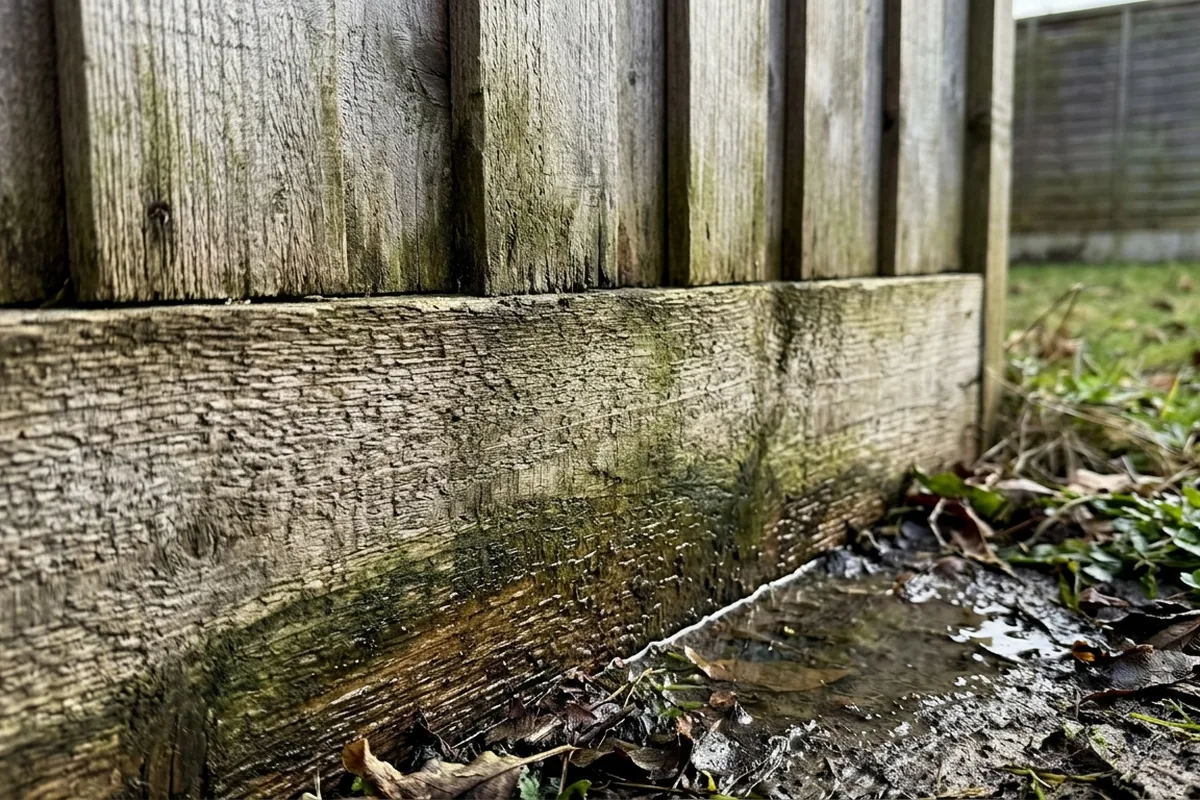
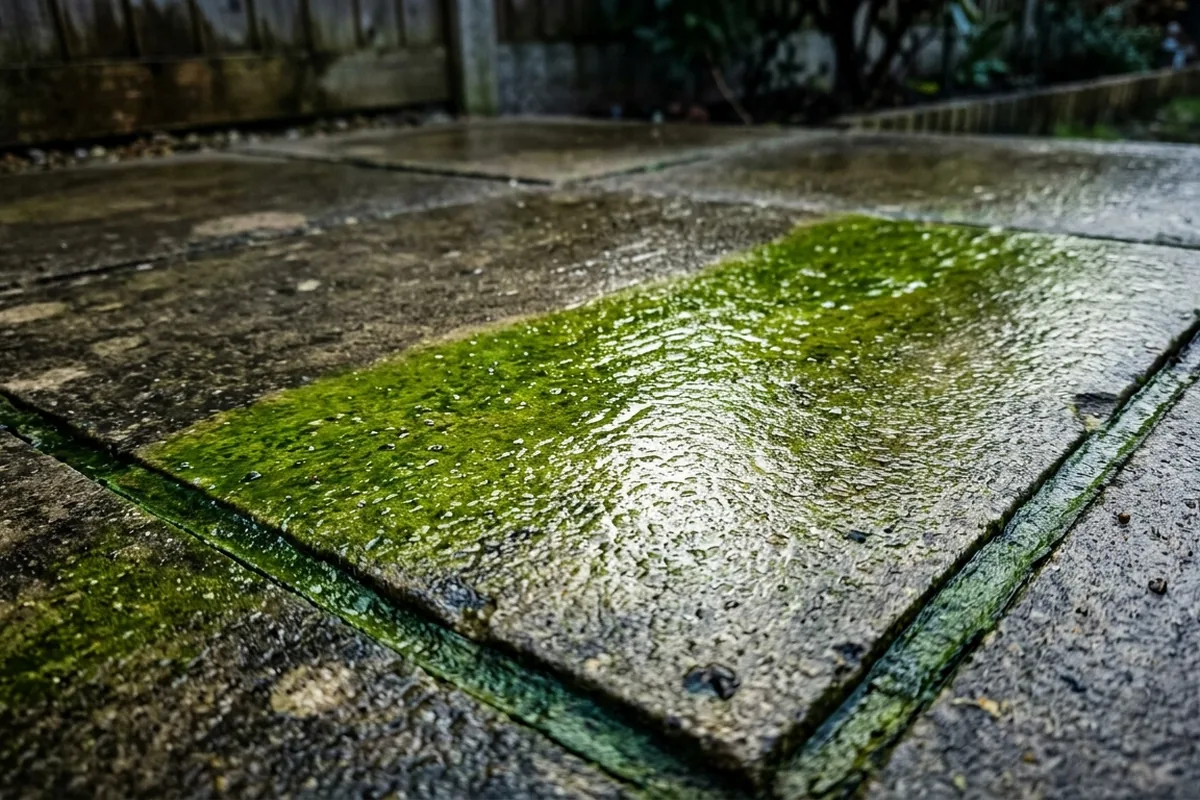
The green film on your patio after a few wet days is usually not “staining” at all. It is mostly algae and sometimes moss or lichen feeding on moisture, shade and a bit of dirt. Rain doesn’t cause the green on its own, it just gives the growth the damp surface it needs. It gets worse where water sits, where there is little sun or airflow, and where there is a thin layer of soil, dust or old organic matter to cling to.
If your slabs go bright green every time it rains, the real fix is to reduce standing water, improve light and airflow and then clean the surface. Just pressure washing once a year helps only for a while if the conditions stay perfect for regrowth.
Why patios turn green after rain
When rain hits your patio in a typical British winter or wet spring, it soaks into tiny pores and surface texture on the slabs. Those damp, rough spots are ideal for algae, which are simple plant-like organisms that love:
- constant or frequent moisture
- shade or low winter sun
- a film of dirt, dust, pollen or soil to grip
Concrete, textured porcelain and old natural stone in a terraced garden are all slightly rough, so they hold more water and muck than a smooth kitchen tile would. As the surface stays damp after rain, algae spread as a thin green film. Moss tends to appear as thicker, spongy patches, usually in joints and corners where water lingers.
Rain makes this worse in two ways:
1. It keeps the surface damp for longer, especially in cool weather.
2. It can wash fine soil and organic bits from borders, pots and gutters onto the slabs, giving algae food and a place to root.
If the slabs dry quickly after showers, algae struggle. If they stay visibly wet for hours, particularly on the north side of the house or along a fence, the green will keep coming back.
What makes the green growth worse on some slabs
Some patios seem to go neon green overnight while others barely change. That is usually down to a mix of layout, surface and maintenance, not “bad slabs”.
Layout and drainage
Patios stay greener where:
- Water runs off the roof or blocked gutters straight onto the paving.
- The slabs are level or even slightly dipped, so puddles sit after rain.
- They are tight against a fence, hedge or shed with little airflow.
- They face north or are shaded by the house, so they rarely see direct sun.
If you notice the same patches always slimy, that often points to poor drainage or permanent shade. Fixing fall and drainage is a bigger job, but even small changes like clearing a blocked gully, trimming a hedge or moving big planters off the worst spots can noticeably reduce regrowth.
Slab type and age
Older, more porous slabs and rough riven stone hold more moisture and dirt than smooth, dense pavers. That makes them feel slippery faster and look greener after just a couple of wet weeks.
Sealing can help in some cases, but only if the slabs are thoroughly cleaned first and the sealer is suitable for that material. A poorly chosen or badly applied sealer can actually trap moisture and encourage patchy growth, so it is worth checking the manufacturer’s guidance or asking at somewhere like Wickes before coating a large area.
Everyday habits that encourage green growth
A few normal garden habits quietly feed the problem:
- Sweeping only in summer, so autumn leaves and soil sit and break down.
- Overwatering pots so they constantly overflow onto the same area.
- Storing damp items like garden furniture cushions or a muddy wheelbarrow on the slabs.
- Washing the car on the drive and leaving gritty, soapy water to sit.
If you can keep the surface reasonably clear and let it dry between downpours, the green coating will still appear in winter, but usually less thick and less slippery.
How to stop it getting worse and when to be cautious
You do not have to strip the patio back to new every time it rains, but a light, regular clean in the wet months makes a big difference to both appearance and safety.
For most modern concrete slabs:
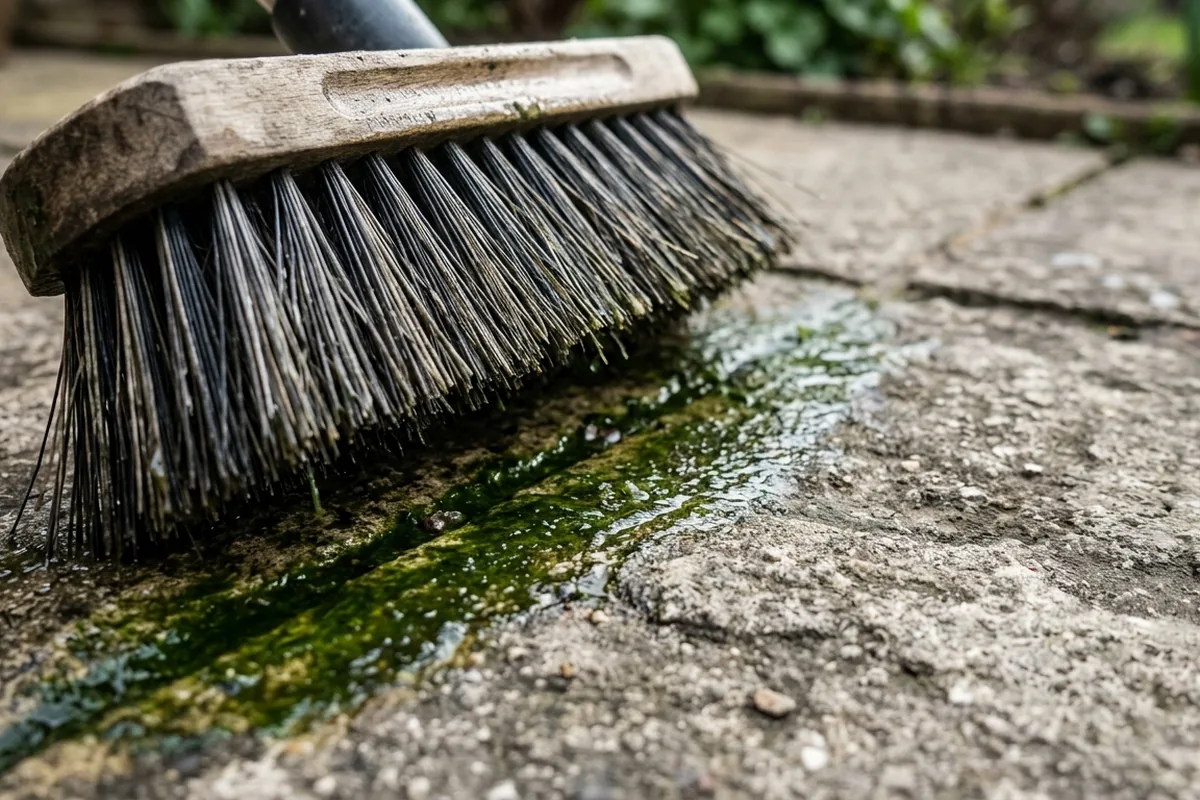
- Start with a stiff outdoor brush and a bucket of warm water with a splash of washing-up liquid.
- Scrub the green film, then rinse with clean water, brushing puddles away so the surface dries faster.
- For stubborn algae, a patio cleaner or diluted outdoor bleach can help, but never mix bleach with any other cleaner, and keep run-off away from lawns and beds as far as you can.
For natural stone, especially limestone or sandstone, be more cautious:
- Avoid vinegar or strong acidic cleaners, as they can etch or dull the stone.
- Use a stone-safe patio cleaner and test on a small, hidden area first.
- Go gentle with pressure washers: keep the lance moving, stand back a little and avoid blasting out the joints.
If you are in a rented flat with a shared courtyard, stick to mild cleaners and brushing unless you have permission to use stronger products or a pressure washer.
The green will always return in a British winter, but if it is building up thickly within days, check for a drainage or shade issue rather than just buying stronger chemicals. Once the slabs dry quickly after showers and the loose muck is gone, a light scrub every so often is usually enough to keep the green under control.