That strange sweet-sour whiff when you open the freezer door is usually the first sign something isn’t quite right. Even if everything looks frozen solid, you might notice a faint smell of old peas, fish fingers or last month’s curry clinging to the ice. That’s when people reach for a small open tub of bicarbonate of soda and tuck it on a shelf.
The point of putting bicarbonate of soda in the freezer is not to perfume it, but to soak up stray odours from the air and from slightly exposed food. It can help keep a fairly clean freezer smelling neutral, but it will not fix serious spills, long‑term ice build-up or food that has already absorbed a bad smell. If the freezer stinks even with fresh bicarb inside, you usually need a proper clean rather than more powder.
What bicarbonate of soda in the freezer actually does
Bicarbonate of soda (baking soda) is a mild alkaline powder that can neutralise acidic and some basic odour molecules in the air. In a freezer, it quietly sits there absorbing whiffs from things like open chip bags, leaky containers or ice that’s started to pick up smells.
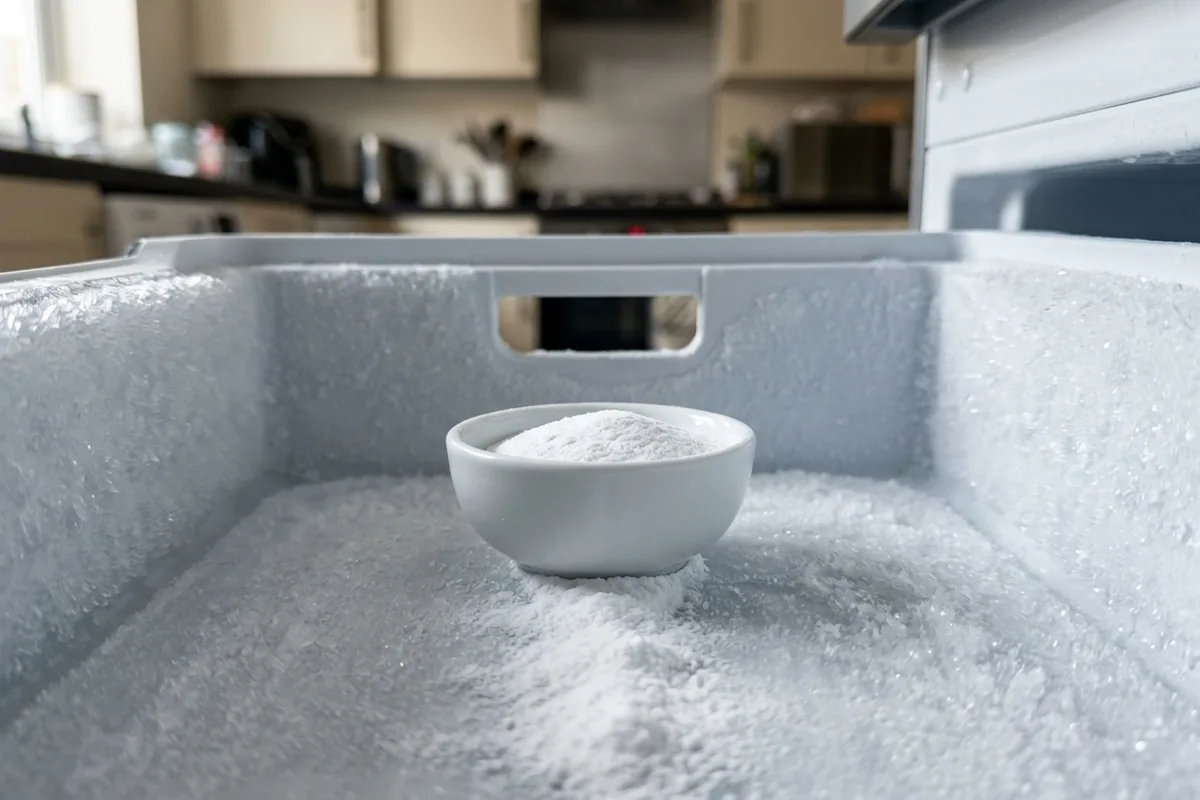
It works best when the freezer is already reasonably clean and you’re just trying to prevent that “mixed leftovers” smell building up again. Many people in UK kitchens simply keep a small open ramekin or a shallow tub of bicarb at the back of a shelf and refresh it every couple of months.
What it does well:
- Reduces light, mixed food odours in a clean or recently cleaned freezer
- Helps stop neutral foods like ice cubes picking up a faint onion or fish smell
- Acts as a cheap, safe and scent‑free alternative to fragranced odour absorbers
What it doesn’t do:
- It won’t disinfect – it’s not a replacement for a proper clean with washing-up liquid
- It can’t fix rotten food – if something has gone off, the smell will keep coming back
- It won’t undo freezer burn or improve the taste of food that’s already been affected
If you’re opening the freezer in your flat and getting a strong blast of fish, garlic or something sour, bicarb alone is only ever a short-term mask. The real answer is usually in a drip, spill or badly wrapped packet.
When the freezer trick helps – and when it doesn’t
The bicarb-in-the-freezer trick is handy, but it’s only one part of keeping odours down. The key is knowing when it’s enough and when you need to do more.
It’s worth using bicarb if:
- The freezer smells a bit “mixed” but not foul, and you can’t see any obvious spill
- You’ve just defrosted and cleaned the freezer and want to keep it fresh for longer
- You store strong-smelling foods (fish, garlic bread, leftover curry) and notice ice cubes or plain frozen veg picking up a hint of smell
In these cases, a small open container of bicarbonate of soda on a middle shelf can quietly improve things over a few days. Replace it roughly every 2–3 months, or sooner if you notice the smell creeping back.
It’s not enough on its own if:
- There’s a sharp, rotten or sickly smell when you open the door
- You can see spilled meat juices, sticky residue or old ice build-up on drawers and seals
- The freezer was accidentally left open or off and food has partially thawed and refrozen
In those situations, you need to:
1. Empty and check food – anything that looks freezer-burnt, badly wrapped or suspect should go in the bin.
2. Clean the interior – use warm water with a bit of washing-up liquid, a soft cloth or sponge, and dry well.
3. Only then add a fresh pot of bicarbonate of soda to keep things neutral.
If the smell lingers after cleaning
If you’ve cleaned the plastic liners, shelves and drawers but there’s still a musty or stale smell:
- Check the rubber door seal for trapped crumbs, dried spills and mouldy patches. Wipe carefully into the folds with a damp cloth.
- Look in the drip channels or around the back of drawers for hidden ice or residue.
- Make sure the under‑sink cupboard or nearby area isn’t musty and feeding smells into the room – sometimes what we blame on the freezer is actually the general kitchen odour.
If, after all that, the smell is still very strong or chemical‑like, it may be worth checking the appliance instructions or speaking to the manufacturer, especially if the freezer is quite new. Bicarbonate of soda won’t solve an internal fault.
How to use bicarbonate of soda safely and sensibly in the freezer
Used properly, bicarbonate of soda is one of the safest odour helpers you can keep in a kitchen. It’s food-safe, cheap and doesn’t add its own fragrance. But it still pays to use it with a bit of care.
A simple way to set it up:
- Pour 2–4 tablespoons of plain bicarbonate of soda into a small, clean, dry ramekin or shallow plastic tub.
- Place it upright on a stable shelf, not wedged into the door where it can tip over.
- Keep it away from vents or fan outlets, so it doesn’t get blown around.
- Mark the date on a bit of masking tape on the tub so you know when to change it.
A few points to watch:
- Don’t let it spill into the freezer. If it does, sweep or vacuum the dry powder first, then wipe with a damp cloth.
- Don’t store it uncovered for cooking later. Once it’s been sitting in the freezer absorbing odours and moisture, treat it as waste and bin it.
- Avoid mixing it with other cleaners inside the freezer. If you use vinegar or a commercial cleaner for a deep clean, rinse and dry surfaces thoroughly before putting fresh bicarb back in.
If you’re tempted to use other “freezer fresh” tricks
You’ll see tips online suggesting coffee grounds, lemon slices or vanilla-soaked cotton pads in the freezer. These can:
- Add their own strong scent, which not everyone wants on frozen food
- Be messy if they tip, drip or dry out
- Mask the smell rather than telling you when something is genuinely off
Bicarbonate of soda is better as a neutral indicator: if your freezer still smells bad even with fresh bicarb in place, it’s a sign you should be looking for a spill, a badly sealed container or food that needs to go.
If you treat the bicarb pot as a quiet helper rather than a miracle cure, it can keep a clean freezer in a terraced house or small flat smelling like nothing at all – which is exactly what you want when you open the door.