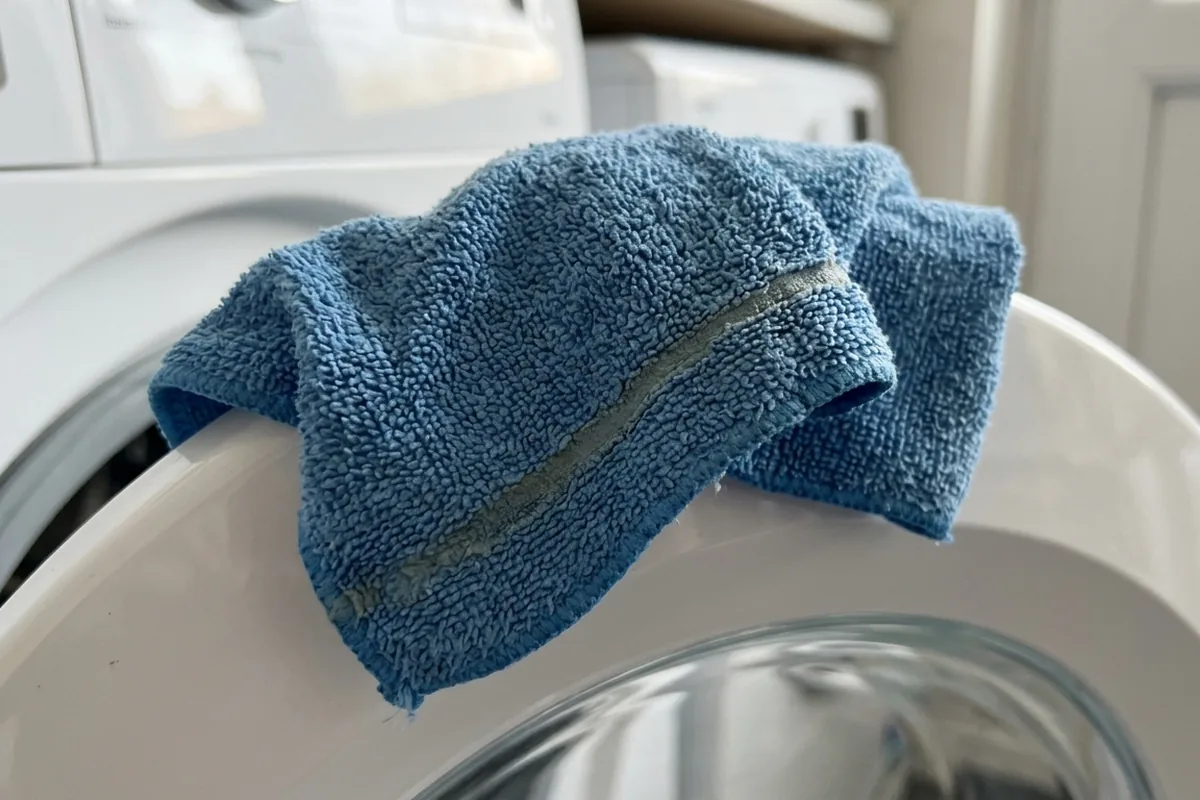
The usual sign is simple: your favourite microfibre cloth that used to grab dust and leave glass streak‑free suddenly just smears everything around. It can feel “slimy”, won’t absorb spills in the kitchen and seems to push fingerprints across your TV instead of lifting them. That usually means the fibres have been clogged, damaged or both by the way it was washed, not that the cloth is “worn out” in the normal sense. The fix is to strip out the residue, then stop repeating the same wash mistakes.
What actually goes wrong in the wash
Microfibre works because each strand is split into tiny hooks that grab grease, dust and moisture. The wrong wash can either glue those hooks together or blunt them, so the cloth behaves more like a flat tea towel.
The main culprits are:
- Fabric softener and 2‑in‑1 detergents
Softeners leave a waxy coating that makes towels feel fluffy. On microfibre, that coating fills the tiny gaps that do the cleaning. The cloth then repels water and just smears.
- Too much detergent or detergent pods that don’t fully dissolve
Extra suds mean residue. On a cool eco wash, especially in a crowded drum, that residue can stay in the cloth, again clogging the fibres.
- High heat in the wash or tumble dryer
Microfibre is plastic. Hot 60°C+ washes and hot tumble cycles can melt or deform the fibres, turning them smoother and less grippy. They may also shrink or go a bit “crunchy”.
- Washing with lint‑shedding fabrics
If you chuck microfibres in with cotton bath towels, the cloth comes out covered in lint. Those loose fibres tangle into the microfibre and stop it gripping dirt properly.
- Heavy soil left in too long
Oily kitchen cloths or ones used on bike chains or a greasy oven can get so saturated that normal washing never fully clears the build‑up. The grease lives in the fibres and they stay “dead”.
Once you know which of these has happened, you can usually work out whether a deep clean will rescue the cloth or if it’s time to demote it to car or garden duty.
How to rescue microfibre that has stopped working
If the cloth isn’t heat‑damaged, a stripping wash often brings it back. You’re trying to remove softener, detergent residue and oils, not add more.
Simple rescue wash
1. Rinse first
Rinse the cloths under hot tap water and squeeze several times until the water runs mostly clear. This gets rid of loose grime.
2. Hot water soak with detergent only
Fill a bowl or bucket with very hot (but not boiling) tap water. Add a small amount of liquid laundry detergent, no softener, no bleach. Swish to mix, then soak the cloths for 30–60 minutes, squeezing them a few times to work the water through.
3. Machine wash separately
Put just the microfibre cloths in the washing machine. Use:
- 40°C or at most 60°C
- A long rinse or “extra rinse” option if your machine has one
- No softener at all
Use less detergent than you would for a full load. You want them rinsed clean, not perfumed.
4. Line dry or low heat only
Ideally air‑dry on a clothes horse or washing line. If you must tumble dry, use low heat and take them out as soon as they’re dry, not baked.
If the problem was softener or mild residue, you’ll often notice the cloth feels “grabby” again once dry and will cling to your hand or the worktop slightly. That’s a good sign.
When a cloth is past saving
Some damage can’t be undone:
- The cloth feels stiff, shiny or slightly melted in patches.
- It no longer feels “catchy” on dry skin, even after a deep clean.
- Fibres look matted and flat, more like an old duster.
At that point, keep it for messy jobs: cleaning outdoor furniture, bike chains, muddy boots or the inside of the bin, and buy a fresh set for glass, kitchen worktops and bathroom taps.
How to wash microfibre properly next time
Once you’ve revived or replaced your cloths, a few small changes keep them working properly for much longer, whether you’re cleaning a shower screen, wiping limescale off taps or dusting skirting boards.
Best practice for washing microfibre cloths:
- Wash them separately or with other synthetics
Keep them away from cotton towels and fluffy dressing gowns that shed lint.
- Skip fabric softener every time
That includes 2‑in‑1 capsules and “scent boosters”. If you want a fresher smell, use a touch of detergent and line dry outdoors if you can.
- Moderate temperature
40°C is usually enough for general house dust and fingerprints. Go up to 60°C only for very grubby cloths, and not on every wash. Constant high heat shortens their life.
- Low or no tumble heat
Air‑dry in the utility room, over the bath or on a clothes horse near a radiator. If you use a tumble dryer, choose a cool or low setting.
- Use less detergent than you think
Microfibre doesn’t need a heavy wash. Too much detergent is a common reason they start to repel water.
If you often use one cloth for greasy kitchen jobs, keep a separate “grease gang” and give those cloths a hotter wash more regularly, so the oil doesn’t build up. Cloths used only on glass, mirrors or TV screens can stay on cooler, gentler cycles.
One small check: when the cloth is dry, lay it on a smooth kitchen worktop and slide your hand over it. If it catches slightly and wants to cling, it’s in good shape. If it glides like a polished tea towel and leaves smears on a clean window, it’s either not rinsed properly or its fibres are worn. Adjust the wash first; if that doesn’t help, demote it and start a fresh cloth on your glass and stainless steel.