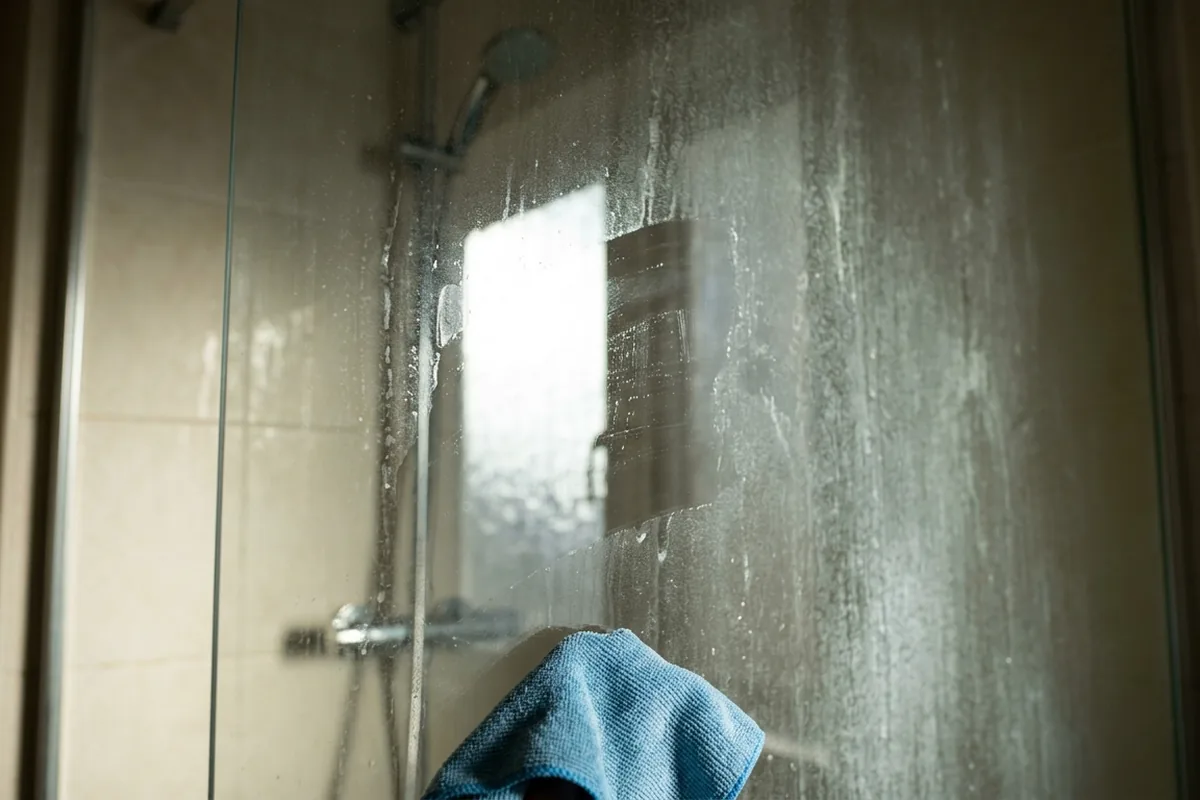
You’ve scrubbed the glass already and stepped back expecting it to sparkle, but the shower screen still looks cloudy, streaky or patchy, especially when the bathroom light hits it. The usual reason is that you’ve cleaned the surface dirt, soap and body oils, but hard water limescale and etched-in marks are still there. In some cases the glass isn’t actually dirty at all: it’s been permanently damaged, either by years of scale or by abrasive cleaners.
Most cloudy shower screens come down to four things: limescale, leftover soap scum, a film from products you’re using and, in older bathrooms, etched or damaged glass that will never go fully clear again. The trick is to work out which one you’re looking at before you keep throwing cleaners at it.
What that cloudiness usually is – and what it isn’t
On a typical UK shower screen, especially in a hard-water area, the cloudiness is usually a build-up of mineral deposits and soap that normal bathroom spray can’t fully shift.
You can often tell what you’re dealing with by how it looks and feels:
| What you see or feel | Likely cause | First thing to try |
|---|---|---|
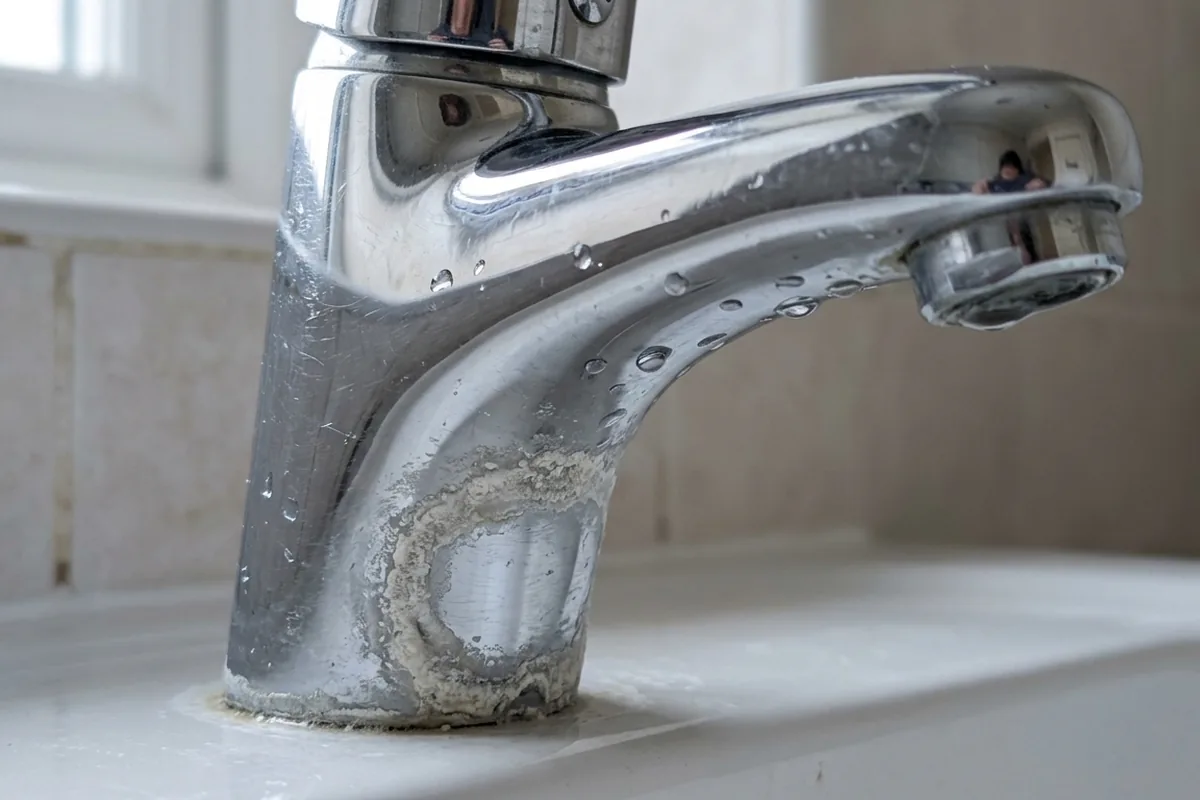
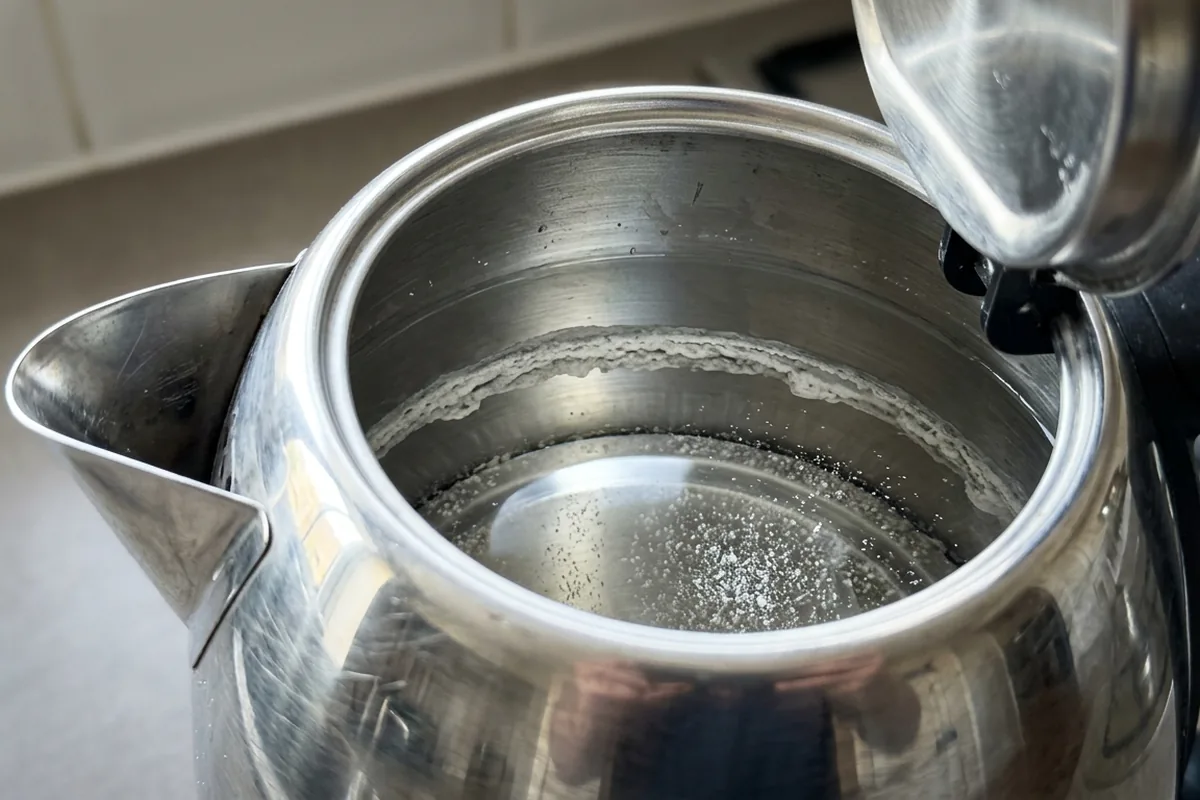
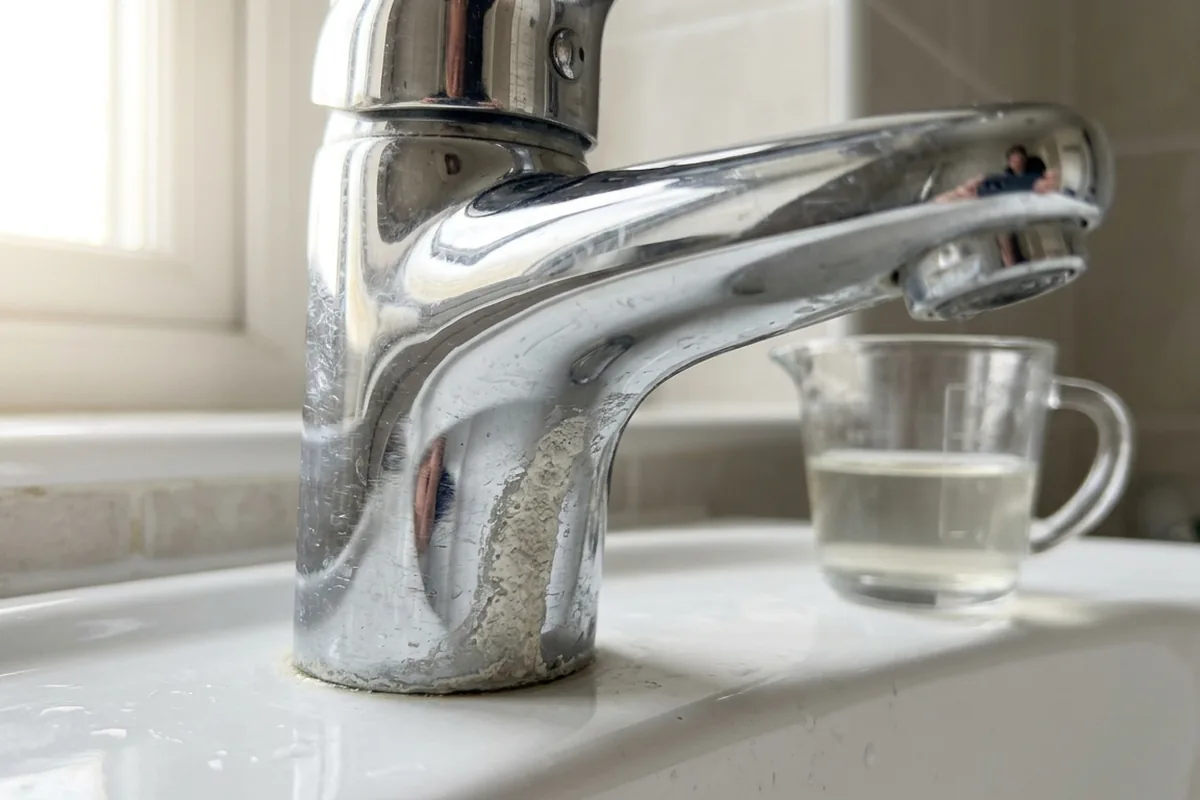
| White, chalky patches or drips | Limescale from hard water | Mild descaler or white vinegar on glass-safe surfaces |
| Greasy, streaky film that smears | Soap scum and product residue | Hot water, washing-up liquid, microfibre cloth |
| Glass looks milky but feels smooth | Etched or worn glass coating | Test a small patch with proper limescale remover |
| Cloudiness only at the bottom | Standing water drying on glass | Better squeegeeing and airflow after showers |
If the marks feel rough or bumpy under your fingernail, that’s usually limescale. If it feels smooth but looks hazy, it may be etching or a damaged “easy-clean” coating.
Cloudiness is rarely mould; that tends to appear as black or pink staining around silicone sealant and grout lines instead.
Why your usual cleaning isn’t fixing it
Even if you clean the shower every week, a few common habits mean the cloudiness never really shifts.
1. You’re only using an all-purpose spray
General bathroom sprays are good at everyday grime but often too weak on stubborn limescale. If you live in a hard-water area (many parts of the UK do, especially the South and East), you usually need:
- A proper limescale remover (Viakal, Kilrock, HG, etc.) or
- White vinegar, used carefully on plain glass and chrome only
Always avoid vinegar and acidic descalers on natural stone tiles, some marble-effect panels and damaged grout, as they can etch or dull them. If in doubt, test a tiny hidden patch first.
2. You’re cleaning too quickly
Limescale needs contact time. Spraying and wiping straight off mostly moves surface dirt around and leaves the chalky deposits behind. For a stubborn screen, a safer approach is:
- Spray or apply your descaler to the glass only
- Leave it for the time on the label (usually a few minutes)
- Wipe with a non-scratch sponge or microfibre cloth
- Rinse thoroughly and dry with a clean cloth or squeegee
If you’re using vinegar, soak kitchen roll with vinegar, press it onto the glass, leave for 10–15 minutes, then rinse well. Never mix vinegar with bleach and keep the room well ventilated.
3. You’ve built up a film from cleaners
Some products, especially those labelled as “2-in-1 cleaner and protector”, can leave a silicone-like film. Over time this can go cloudy and attract more soap scum. If you suspect this:
- Wash the screen with hot water and a small squirt of washing-up liquid
- Rinse really well
- Dry with a microfibre cloth
If it suddenly looks clearer, it was likely product residue rather than just limescale.
4. The glass coating is worn or etched
Many modern screens have an “easy-clean” coating. Harsh scouring pads, cream cleaners or strong chemicals can scratch or strip this, leaving the glass permanently misty.
Signs this might be the case:
- Cloudiness doesn’t change at all after a proper descaling attempt
- The glass looks patchy where it gets most water
- You’ve used abrasive pads or strong cream cleaners on it in the past
Once glass is etched, cleaning won’t make it truly clear again. You can improve it slightly, but the limit is the glass itself.
How to get it as clear as it can be – and when to stop
If your screen is just suffering from stubborn build-up, a short focused clean usually makes a big difference.
For heavy limescale on plain glass:
1. Check nearby surfaces: avoid getting acid cleaner on stone tiles, metal trims that mark easily or damaged silicone.
2. Apply a dedicated limescale remover to the glass, following the bottle exactly.
3. Leave it on for the full contact time, then gently agitate with a soft sponge.
4. Rinse thoroughly, then squeegee and buff dry with a microfibre cloth.
Repeat once more if needed rather than scrubbing harder. Avoid scouring pads and wire wool on glass; they can scratch and make future cloudiness worse.
For soap scum and product film:
Use hot water and washing-up liquid first to strip the greasy layer, then follow with a lighter descale if you still see white patches.
If it still looks cloudy after a good clean
If you’ve:
- Used a proper limescale remover correctly
- Given it enough contact time
- Rinsed and dried it thoroughly
and the glass still has a uniform milky look, the cloudiness is likely permanent etching or coating damage rather than dirt.
At this point:
- Keep the screen clean and dry after showers (quick squeegee, then leave the door open and extractor fan on)
- Accept that it may never look brand new, or
- Consider replacing the screen if it really bothers you and the rest of the bathroom is in good condition
For rented flats, it’s usually enough to show you’ve kept the screen clean and free of heavy build-up, even if the glass itself is a bit tired from previous tenants.
If you repeat strong descaling every week and see no improvement at all, it is better to stop than to keep attacking the surface. A slightly cloudy but intact screen is preferable to a scratched or pitted one.